🎉 Up to 70% Off Selected ItemsShop Sale
Sou Filho Dêsse Chão
Brazil is a treasure trove of inspirational music from the past, present, and future. Here we head back to 1976 for a one-of-a-kind kaleidoscopic journey, melding Brazilian regional rhythms with funk, rock, soul, and psychedelia by the married couple Eduardo Araújo and Silvinha. A cult classic and beloved record for some of the scene’s biggest DJs including Floating Points, it was further immortalised when Madlib sampled ‘Opanigê’ for his track ‘São Paulo’.
Singers Eduardo Araújo and Silvinha Araújo had successful careers in Brazil beginning in the 1960s. Eduardo broke through with the rock-infused Jovem Guarda hit ‘O Bom’. Stepping into more soulful territory, Eduardo released ‘A Onda É Boogaloo’ in 1969, produced by a young Tim Maia and followed it up with a number of other notable releases. Also part of the Jovem Guarda movement, Silvinha recorded a string of excellent albums and numerous 7” compactos for Odeon and RCA.
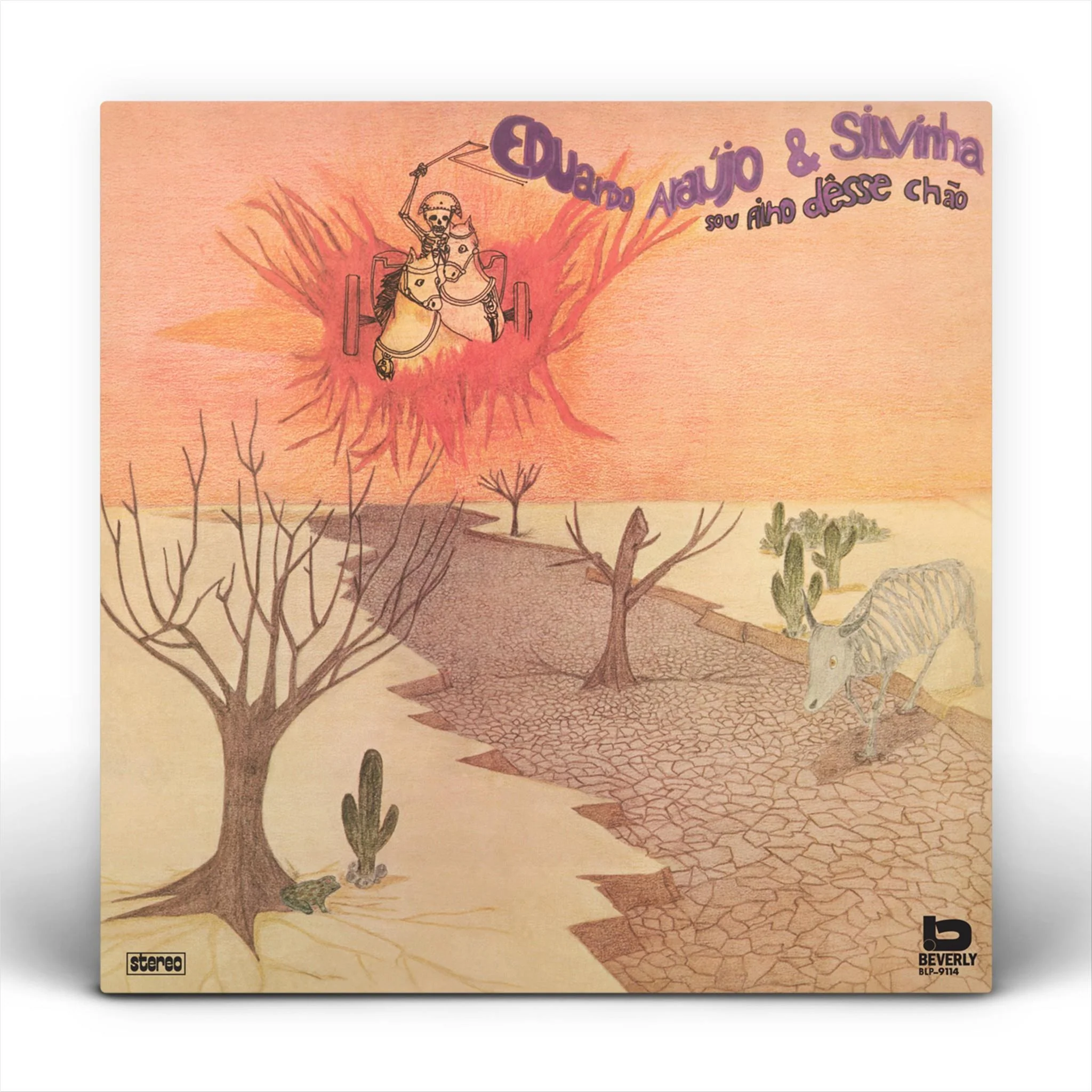
In 1976, the duo set forth the landmark underground album Sou Filho Dêsse Chão, complete with its eye-catching psychedelic cover art by Gustavo Matula and Jan Matula. The album featured a heavyweight line up of musicians, including accordionist supreme Dominguinhos, the drummer Dirceu Medeiros, who played on the first Os Mutantes album, and members of the esteemed bands Banda Black Rio and Som Nosso.
Sou Filho Dêsse Chão was inspired by the pair's travels to Salvador, Bahia. Eduardo was influenced by the Brazilian culture of the region and wanted to incorporate and capture the sounds of capoeira, Forró, and candomblé into the album. Here we have the traditional African-Brazilian culture of Northern Brazil fusing with the contemporary commercial music of Rio and São Paulo’s Tropicalia, MPB, psych-rock, and Black Rio movements. Uniting the cultures, Eduardo and Silvinha managed to combine these genres seamlessly.
It's an album full of highlights, with the Tim Maia-esque funk of ‘O Tempo Que Esse Tempo Tem’ laced with its rock tones, sitting side by side with the accordion-driven ‘Sou Filho Desse Chão’ and rolling groove of ‘Manda Embora A Tristeza’. Elsewhere the elegant trippy psych-funk of ‘Capoeira’ sees Eduardo and Silvinha effortlessly trading vocal duties. The record would also reach a new audience outside of Brazil when one of the standout tracks, the highly original spacey ‘Opanigê’, was sampled by Madlib for his track ‘São Paulo’.
Even though on release it was not a commercial success, Sou Filho Dêsse Chão has since found its place as an iconic and treasured LP.
Singers Eduardo Araújo and Silvinha Araújo had successful careers in Brazil beginning in the 1960s. Eduardo broke through with the rock-infused Jovem Guarda hit ‘O Bom’. Stepping into more soulful territory, Eduardo released ‘A Onda É Boogaloo’ in 1969, produced by a young Tim Maia and followed it up with a number of other notable releases. Also part of the Jovem Guarda movement, Silvinha recorded a string of excellent albums and numerous 7” compactos for Odeon and RCA.
In 1976, the duo set forth the landmark underground album Sou Filho Dêsse Chão, complete with its eye-catching psychedelic cover art by Gustavo Matula and Jan Matula. The album featured a heavyweight line up of musicians, including accordionist supreme Dominguinhos, the drummer Dirceu Medeiros, who played on the first Os Mutantes album, and members of the esteemed bands Banda Black Rio and Som Nosso.
Sou Filho Dêsse Chão was inspired by the pair's travels to Salvador, Bahia. Eduardo was influenced by the Brazilian culture of the region and wanted to incorporate and capture the sounds of capoeira, Forró, and candomblé into the album. Here we have the traditional African-Brazilian culture of Northern Brazil fusing with the contemporary commercial music of Rio and São Paulo’s Tropicalia, MPB, psych-rock, and Black Rio movements. Uniting the cultures, Eduardo and Silvinha managed to combine these genres seamlessly.
It's an album full of highlights, with the Tim Maia-esque funk of ‘O Tempo Que Esse Tempo Tem’ laced with its rock tones, sitting side by side with the accordion-driven ‘Sou Filho Desse Chão’ and rolling groove of ‘Manda Embora A Tristeza’. Elsewhere the elegant trippy psych-funk of ‘Capoeira’ sees Eduardo and Silvinha effortlessly trading vocal duties. The record would also reach a new audience outside of Brazil when one of the standout tracks, the highly original spacey ‘Opanigê’, was sampled by Madlib for his track ‘São Paulo’.
Even though on release it was not a commercial success, Sou Filho Dêsse Chão has since found its place as an iconic and treasured LP.
$5.71
Original: $19.04
-70%Sou Filho Dêsse Chão—
$19.04
$5.71Product Information
Product Information
Shipping & Returns
Shipping & Returns
Description
Brazil is a treasure trove of inspirational music from the past, present, and future. Here we head back to 1976 for a one-of-a-kind kaleidoscopic journey, melding Brazilian regional rhythms with funk, rock, soul, and psychedelia by the married couple Eduardo Araújo and Silvinha. A cult classic and beloved record for some of the scene’s biggest DJs including Floating Points, it was further immortalised when Madlib sampled ‘Opanigê’ for his track ‘São Paulo’.
Singers Eduardo Araújo and Silvinha Araújo had successful careers in Brazil beginning in the 1960s. Eduardo broke through with the rock-infused Jovem Guarda hit ‘O Bom’. Stepping into more soulful territory, Eduardo released ‘A Onda É Boogaloo’ in 1969, produced by a young Tim Maia and followed it up with a number of other notable releases. Also part of the Jovem Guarda movement, Silvinha recorded a string of excellent albums and numerous 7” compactos for Odeon and RCA.
In 1976, the duo set forth the landmark underground album Sou Filho Dêsse Chão, complete with its eye-catching psychedelic cover art by Gustavo Matula and Jan Matula. The album featured a heavyweight line up of musicians, including accordionist supreme Dominguinhos, the drummer Dirceu Medeiros, who played on the first Os Mutantes album, and members of the esteemed bands Banda Black Rio and Som Nosso.
Sou Filho Dêsse Chão was inspired by the pair's travels to Salvador, Bahia. Eduardo was influenced by the Brazilian culture of the region and wanted to incorporate and capture the sounds of capoeira, Forró, and candomblé into the album. Here we have the traditional African-Brazilian culture of Northern Brazil fusing with the contemporary commercial music of Rio and São Paulo’s Tropicalia, MPB, psych-rock, and Black Rio movements. Uniting the cultures, Eduardo and Silvinha managed to combine these genres seamlessly.
It's an album full of highlights, with the Tim Maia-esque funk of ‘O Tempo Que Esse Tempo Tem’ laced with its rock tones, sitting side by side with the accordion-driven ‘Sou Filho Desse Chão’ and rolling groove of ‘Manda Embora A Tristeza’. Elsewhere the elegant trippy psych-funk of ‘Capoeira’ sees Eduardo and Silvinha effortlessly trading vocal duties. The record would also reach a new audience outside of Brazil when one of the standout tracks, the highly original spacey ‘Opanigê’, was sampled by Madlib for his track ‘São Paulo’.
Even though on release it was not a commercial success, Sou Filho Dêsse Chão has since found its place as an iconic and treasured LP.
Singers Eduardo Araújo and Silvinha Araújo had successful careers in Brazil beginning in the 1960s. Eduardo broke through with the rock-infused Jovem Guarda hit ‘O Bom’. Stepping into more soulful territory, Eduardo released ‘A Onda É Boogaloo’ in 1969, produced by a young Tim Maia and followed it up with a number of other notable releases. Also part of the Jovem Guarda movement, Silvinha recorded a string of excellent albums and numerous 7” compactos for Odeon and RCA.
In 1976, the duo set forth the landmark underground album Sou Filho Dêsse Chão, complete with its eye-catching psychedelic cover art by Gustavo Matula and Jan Matula. The album featured a heavyweight line up of musicians, including accordionist supreme Dominguinhos, the drummer Dirceu Medeiros, who played on the first Os Mutantes album, and members of the esteemed bands Banda Black Rio and Som Nosso.
Sou Filho Dêsse Chão was inspired by the pair's travels to Salvador, Bahia. Eduardo was influenced by the Brazilian culture of the region and wanted to incorporate and capture the sounds of capoeira, Forró, and candomblé into the album. Here we have the traditional African-Brazilian culture of Northern Brazil fusing with the contemporary commercial music of Rio and São Paulo’s Tropicalia, MPB, psych-rock, and Black Rio movements. Uniting the cultures, Eduardo and Silvinha managed to combine these genres seamlessly.
It's an album full of highlights, with the Tim Maia-esque funk of ‘O Tempo Que Esse Tempo Tem’ laced with its rock tones, sitting side by side with the accordion-driven ‘Sou Filho Desse Chão’ and rolling groove of ‘Manda Embora A Tristeza’. Elsewhere the elegant trippy psych-funk of ‘Capoeira’ sees Eduardo and Silvinha effortlessly trading vocal duties. The record would also reach a new audience outside of Brazil when one of the standout tracks, the highly original spacey ‘Opanigê’, was sampled by Madlib for his track ‘São Paulo’.
Even though on release it was not a commercial success, Sou Filho Dêsse Chão has since found its place as an iconic and treasured LP.