🎉 Up to 70% Off Selected ItemsShop Sale
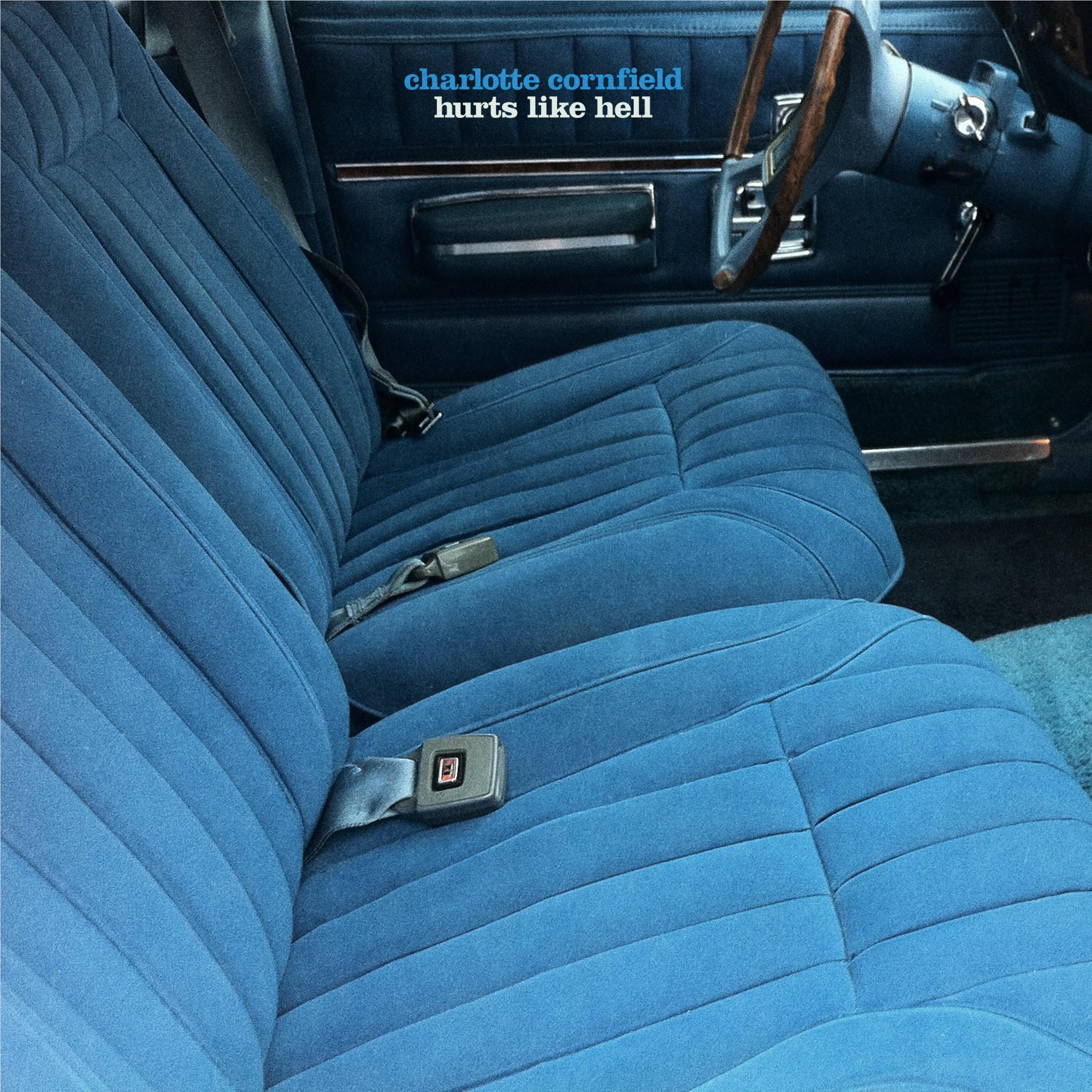
Hurts Like Hell
Hurts Like Hell is Charlotte Cornfield’s sixth album, the first she’s recorded since the birth of her daughter, an inflection point for her as a person and an artist. The album’s recurrent themes of personal growth and renewal, of love’s perseverance through difficulty and shame and awkwardness, are rooted there. “That experience has pulled me out of myself and given me a different outlook on things,” she says.
“The vulnerability and fragility and wildness of it all has made me less focused on self, more zoomed out.”
Hurts Like Hell is the most open-hearted, full-voiced album of her career, and also her most collaborative. Decamping to Philip Weinrobe’s Sugar Mountain studio in Brooklyn, Cornfield was joined by a full backing band, including Palehound’s El Kempner, Lake Street Dive’s Bridget Kearney, Adam Brisbin, and Sean Mullins, with key contributions by Núria Graham, and Daniel Pencer. Cornfield then recruited Feist, Buck Meek, Christian Lee Hutson and Maia Friedman to sing on the album.
The fruits of this process are immediately apparent on lead single “Hurts Like Hell,” a country-saturated yearner Cornfield calls “a shy people love story,” the band swelling to embrace Cornfield’s idiosyncratic flow as if to cradle her protagonist’s heart. That the song is so vulnerable, so lived-in, is a matter of trust between Cornfield and her bandmates, in each other and of their gut. Their sound lands somewhere between Nashville Skyline and Harvest; a warm, richly-textured response to her bruised-but-seeking call.
Much of Hurts Like Hell’s magic happens in the space Cornfield makes for harmony. Taken up by Meek or Hutson, characters are sung into life as if with a brushstroke. When joined by Kempner or Kearney, it’s a dazzling facet of the natural, lightning-in-a-bottle chemistry of her band. On “Kitchen,” Friedman mirrors Cornfield’s sense of astonishment at finding herself in love, rendering the emotion at its ethereal peak. On “Living With It,” she’s joined by Feist, who Cornfield connected through a group chat for mothers who are touring musicians.
Cornfield has arrived at this album bearing both scars from her past and hope for the future. Standing outside of herself and taking stock of what she wanted her music to be in the wake of childbirth, she was brave enough to ask for space, for time, and for help from places and people familiar and unexpected — a group chat, songwriters she was fans of but wasn’t acquainted with, friends whose long-forgotten song leant her the chorus for a new one. Every “yes,” every voice memo, every shared file, every open door leading to this moment in Charlotte Cornfield’s career. Call that moment what you will — an expansion, a rebirth, a breakthrough — Hurts Like Hell is big enough to meet it and has lost none of Cornfield’s charm, wit, or urgency in the offing, at once a reaffirmation of her standing among the great singer-songwriters of her generation and the first articulation of her future, whatever uncertainty and love it may bring.
“The vulnerability and fragility and wildness of it all has made me less focused on self, more zoomed out.”
Hurts Like Hell is the most open-hearted, full-voiced album of her career, and also her most collaborative. Decamping to Philip Weinrobe’s Sugar Mountain studio in Brooklyn, Cornfield was joined by a full backing band, including Palehound’s El Kempner, Lake Street Dive’s Bridget Kearney, Adam Brisbin, and Sean Mullins, with key contributions by Núria Graham, and Daniel Pencer. Cornfield then recruited Feist, Buck Meek, Christian Lee Hutson and Maia Friedman to sing on the album.
The fruits of this process are immediately apparent on lead single “Hurts Like Hell,” a country-saturated yearner Cornfield calls “a shy people love story,” the band swelling to embrace Cornfield’s idiosyncratic flow as if to cradle her protagonist’s heart. That the song is so vulnerable, so lived-in, is a matter of trust between Cornfield and her bandmates, in each other and of their gut. Their sound lands somewhere between Nashville Skyline and Harvest; a warm, richly-textured response to her bruised-but-seeking call.
Much of Hurts Like Hell’s magic happens in the space Cornfield makes for harmony. Taken up by Meek or Hutson, characters are sung into life as if with a brushstroke. When joined by Kempner or Kearney, it’s a dazzling facet of the natural, lightning-in-a-bottle chemistry of her band. On “Kitchen,” Friedman mirrors Cornfield’s sense of astonishment at finding herself in love, rendering the emotion at its ethereal peak. On “Living With It,” she’s joined by Feist, who Cornfield connected through a group chat for mothers who are touring musicians.
Cornfield has arrived at this album bearing both scars from her past and hope for the future. Standing outside of herself and taking stock of what she wanted her music to be in the wake of childbirth, she was brave enough to ask for space, for time, and for help from places and people familiar and unexpected — a group chat, songwriters she was fans of but wasn’t acquainted with, friends whose long-forgotten song leant her the chorus for a new one. Every “yes,” every voice memo, every shared file, every open door leading to this moment in Charlotte Cornfield’s career. Call that moment what you will — an expansion, a rebirth, a breakthrough — Hurts Like Hell is big enough to meet it and has lost none of Cornfield’s charm, wit, or urgency in the offing, at once a reaffirmation of her standing among the great singer-songwriters of her generation and the first articulation of her future, whatever uncertainty and love it may bring.
$18.45
Hurts Like Hell—
$18.45
Product Information
Product Information
Shipping & Returns
Shipping & Returns
Description
Hurts Like Hell is Charlotte Cornfield’s sixth album, the first she’s recorded since the birth of her daughter, an inflection point for her as a person and an artist. The album’s recurrent themes of personal growth and renewal, of love’s perseverance through difficulty and shame and awkwardness, are rooted there. “That experience has pulled me out of myself and given me a different outlook on things,” she says.
“The vulnerability and fragility and wildness of it all has made me less focused on self, more zoomed out.”
Hurts Like Hell is the most open-hearted, full-voiced album of her career, and also her most collaborative. Decamping to Philip Weinrobe’s Sugar Mountain studio in Brooklyn, Cornfield was joined by a full backing band, including Palehound’s El Kempner, Lake Street Dive’s Bridget Kearney, Adam Brisbin, and Sean Mullins, with key contributions by Núria Graham, and Daniel Pencer. Cornfield then recruited Feist, Buck Meek, Christian Lee Hutson and Maia Friedman to sing on the album.
The fruits of this process are immediately apparent on lead single “Hurts Like Hell,” a country-saturated yearner Cornfield calls “a shy people love story,” the band swelling to embrace Cornfield’s idiosyncratic flow as if to cradle her protagonist’s heart. That the song is so vulnerable, so lived-in, is a matter of trust between Cornfield and her bandmates, in each other and of their gut. Their sound lands somewhere between Nashville Skyline and Harvest; a warm, richly-textured response to her bruised-but-seeking call.
Much of Hurts Like Hell’s magic happens in the space Cornfield makes for harmony. Taken up by Meek or Hutson, characters are sung into life as if with a brushstroke. When joined by Kempner or Kearney, it’s a dazzling facet of the natural, lightning-in-a-bottle chemistry of her band. On “Kitchen,” Friedman mirrors Cornfield’s sense of astonishment at finding herself in love, rendering the emotion at its ethereal peak. On “Living With It,” she’s joined by Feist, who Cornfield connected through a group chat for mothers who are touring musicians.
Cornfield has arrived at this album bearing both scars from her past and hope for the future. Standing outside of herself and taking stock of what she wanted her music to be in the wake of childbirth, she was brave enough to ask for space, for time, and for help from places and people familiar and unexpected — a group chat, songwriters she was fans of but wasn’t acquainted with, friends whose long-forgotten song leant her the chorus for a new one. Every “yes,” every voice memo, every shared file, every open door leading to this moment in Charlotte Cornfield’s career. Call that moment what you will — an expansion, a rebirth, a breakthrough — Hurts Like Hell is big enough to meet it and has lost none of Cornfield’s charm, wit, or urgency in the offing, at once a reaffirmation of her standing among the great singer-songwriters of her generation and the first articulation of her future, whatever uncertainty and love it may bring.
“The vulnerability and fragility and wildness of it all has made me less focused on self, more zoomed out.”
Hurts Like Hell is the most open-hearted, full-voiced album of her career, and also her most collaborative. Decamping to Philip Weinrobe’s Sugar Mountain studio in Brooklyn, Cornfield was joined by a full backing band, including Palehound’s El Kempner, Lake Street Dive’s Bridget Kearney, Adam Brisbin, and Sean Mullins, with key contributions by Núria Graham, and Daniel Pencer. Cornfield then recruited Feist, Buck Meek, Christian Lee Hutson and Maia Friedman to sing on the album.
The fruits of this process are immediately apparent on lead single “Hurts Like Hell,” a country-saturated yearner Cornfield calls “a shy people love story,” the band swelling to embrace Cornfield’s idiosyncratic flow as if to cradle her protagonist’s heart. That the song is so vulnerable, so lived-in, is a matter of trust between Cornfield and her bandmates, in each other and of their gut. Their sound lands somewhere between Nashville Skyline and Harvest; a warm, richly-textured response to her bruised-but-seeking call.
Much of Hurts Like Hell’s magic happens in the space Cornfield makes for harmony. Taken up by Meek or Hutson, characters are sung into life as if with a brushstroke. When joined by Kempner or Kearney, it’s a dazzling facet of the natural, lightning-in-a-bottle chemistry of her band. On “Kitchen,” Friedman mirrors Cornfield’s sense of astonishment at finding herself in love, rendering the emotion at its ethereal peak. On “Living With It,” she’s joined by Feist, who Cornfield connected through a group chat for mothers who are touring musicians.
Cornfield has arrived at this album bearing both scars from her past and hope for the future. Standing outside of herself and taking stock of what she wanted her music to be in the wake of childbirth, she was brave enough to ask for space, for time, and for help from places and people familiar and unexpected — a group chat, songwriters she was fans of but wasn’t acquainted with, friends whose long-forgotten song leant her the chorus for a new one. Every “yes,” every voice memo, every shared file, every open door leading to this moment in Charlotte Cornfield’s career. Call that moment what you will — an expansion, a rebirth, a breakthrough — Hurts Like Hell is big enough to meet it and has lost none of Cornfield’s charm, wit, or urgency in the offing, at once a reaffirmation of her standing among the great singer-songwriters of her generation and the first articulation of her future, whatever uncertainty and love it may bring.