🎉 Up to 70% Off Selected ItemsShop Sale
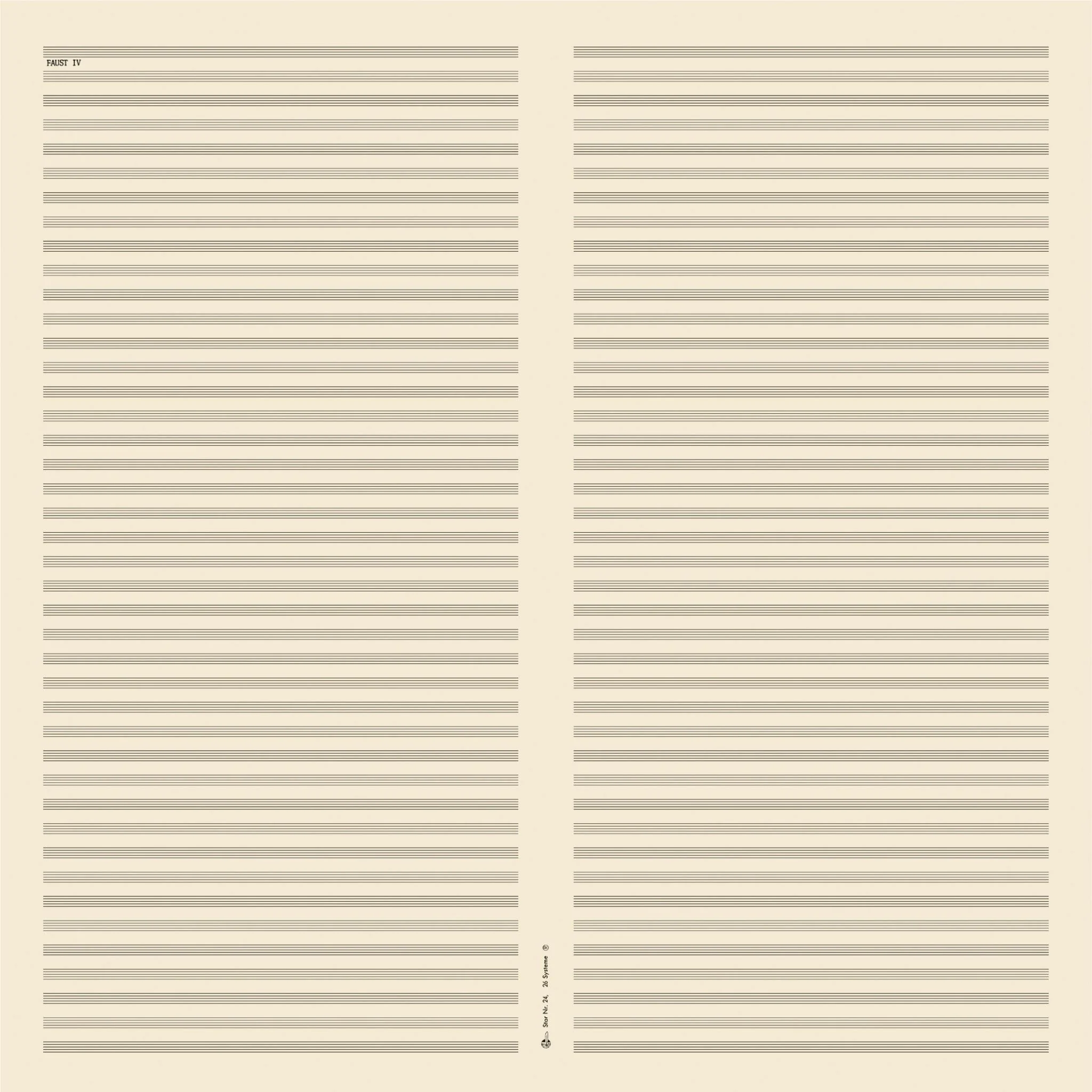
Faust IV
By 1973, Faust had already rewired the circuits of German rock. Their first two albums had exploded traditional
song form with a joyous disregard for continuity, coherence, or commercial appeal. The Faust Tapes, released
earlier that year for 49p as a surreal sampler of their cut-and-paste genius, had earned them a curious British
audience and the indulgence of Virgin Records. For a brief moment, it seemed as though Faust might finally play the
game, just a little. What emerged instead was Faust IV, their most paradoxical work: accessible enough to lure
listeners in, complex enough to keep them guessing.
For the first time, the band left the rustic headquarters in Wümme, a former schoolhouse in rural Lower Saxony, stuffed with cabling, hand-built electronics, and limitless weed, and entered the professional confines of The Manor, Virgin’s newly christened studio in Oxfordshire. Gone was the radical freedom of the commune. In its place: deadlines, engineers, and a rapidly dwindling budget. The sessions stretched on and grew increasingly fraught, yielding a mixture of fresh material and fragments drawn in from earlier experiments in Wümme. Faust IV is the result: part studio artefact, part salvage operation, part séance.
Tongues deeply in cheek or else aimed squarely at the British music press responsible for the reductive term, Faust open this oeuvre with “Krautrock”. Over eleven minutes, Faust lay down insistent sequencers, seesawing guitars and subterranean fuzz, slowly building before erupting into the funkiest motorik imaginable, fizzing with smart syncopation, fills and accents. Though the track is a titular parody of a sonic stereotype, Faust’s version has far more texture and technique than the rest of the pack. “The Sad Skinhead” enters with a gleeful shout and settles into a bizarre reggae lurch, complete with marimba plinks and arch lyrics about heartbreak and hairstyle, which skirt the surreal in typically Faustian fashion.
Squint your ears and it’s almost three minute pop perfection. Almost. That same tension animates much of the album: a shrugging flirtation with form, always undercut by whimsy or abrasion. “Jennifer”, perhaps the band’s most beautiful creation, floats on pulsing bass and delicate guitar, a dream-pop prototype two decades ahead of schedule. It mutates as it plays, descending into feedback and eventually collapsing into a broken piano jig, as if self-conscious of its own beauty.
The B-side trades coherence for combustion. “Just A Second (Starts Like That!)” is all twitching electronics and FX-laden riffage, spiralling into a surreal chamber of wah pedals and pastoral keys. “Picnic on a Frozen River, Deuxième Tableaux” offers some of Faust’s jazziest interplay, bass nimble, sax carefree, before taking a hard swerve into proto-funk and chaotic organ. “Giggy Smile” opens mid-conversation and dissolves into Francophone acid folk, while “Lauft… Heisst Das Es Läuft Oder Es Kommt Bald… Läuft” sees a contemplative organ grow ever more resonant across its run-time, double tracking and reverb seeing it snaking through the long grass of the stereo field. Then comes the sting in the tail: “It’s A Bit of a Pain”, the album’s closer and its emotional knot. A hushed acoustic ballad soon ruptured by fizzing electronics and Swedish monologues, it’s half Stones-y love song, half electro-acoustic prank, a fitting send off to this head-spinning listen.
Faust IV is uneven, restless, and full of contradictions, and that’s exactly what makes it compelling. Its rough edges and loose threads sit right alongside moments of real focus, giving the sense of a band following ideas wherever they lead. Rather than polish things smooth, Faust left the seams visible, and the result feels all the more vital for it. Nearly half a century on, its spirit remains intact: mischievous, mysterious, and gloriously unfinished. If Faust had set out to build a new language, Faust IV shows them mid-sentence, trailing off, cracking jokes, then suddenly profound. Don’t expect to follow the conversation, just keep listening.
song form with a joyous disregard for continuity, coherence, or commercial appeal. The Faust Tapes, released
earlier that year for 49p as a surreal sampler of their cut-and-paste genius, had earned them a curious British
audience and the indulgence of Virgin Records. For a brief moment, it seemed as though Faust might finally play the
game, just a little. What emerged instead was Faust IV, their most paradoxical work: accessible enough to lure
listeners in, complex enough to keep them guessing.
For the first time, the band left the rustic headquarters in Wümme, a former schoolhouse in rural Lower Saxony, stuffed with cabling, hand-built electronics, and limitless weed, and entered the professional confines of The Manor, Virgin’s newly christened studio in Oxfordshire. Gone was the radical freedom of the commune. In its place: deadlines, engineers, and a rapidly dwindling budget. The sessions stretched on and grew increasingly fraught, yielding a mixture of fresh material and fragments drawn in from earlier experiments in Wümme. Faust IV is the result: part studio artefact, part salvage operation, part séance.
Tongues deeply in cheek or else aimed squarely at the British music press responsible for the reductive term, Faust open this oeuvre with “Krautrock”. Over eleven minutes, Faust lay down insistent sequencers, seesawing guitars and subterranean fuzz, slowly building before erupting into the funkiest motorik imaginable, fizzing with smart syncopation, fills and accents. Though the track is a titular parody of a sonic stereotype, Faust’s version has far more texture and technique than the rest of the pack. “The Sad Skinhead” enters with a gleeful shout and settles into a bizarre reggae lurch, complete with marimba plinks and arch lyrics about heartbreak and hairstyle, which skirt the surreal in typically Faustian fashion.
Squint your ears and it’s almost three minute pop perfection. Almost. That same tension animates much of the album: a shrugging flirtation with form, always undercut by whimsy or abrasion. “Jennifer”, perhaps the band’s most beautiful creation, floats on pulsing bass and delicate guitar, a dream-pop prototype two decades ahead of schedule. It mutates as it plays, descending into feedback and eventually collapsing into a broken piano jig, as if self-conscious of its own beauty.
The B-side trades coherence for combustion. “Just A Second (Starts Like That!)” is all twitching electronics and FX-laden riffage, spiralling into a surreal chamber of wah pedals and pastoral keys. “Picnic on a Frozen River, Deuxième Tableaux” offers some of Faust’s jazziest interplay, bass nimble, sax carefree, before taking a hard swerve into proto-funk and chaotic organ. “Giggy Smile” opens mid-conversation and dissolves into Francophone acid folk, while “Lauft… Heisst Das Es Läuft Oder Es Kommt Bald… Läuft” sees a contemplative organ grow ever more resonant across its run-time, double tracking and reverb seeing it snaking through the long grass of the stereo field. Then comes the sting in the tail: “It’s A Bit of a Pain”, the album’s closer and its emotional knot. A hushed acoustic ballad soon ruptured by fizzing electronics and Swedish monologues, it’s half Stones-y love song, half electro-acoustic prank, a fitting send off to this head-spinning listen.
Faust IV is uneven, restless, and full of contradictions, and that’s exactly what makes it compelling. Its rough edges and loose threads sit right alongside moments of real focus, giving the sense of a band following ideas wherever they lead. Rather than polish things smooth, Faust left the seams visible, and the result feels all the more vital for it. Nearly half a century on, its spirit remains intact: mischievous, mysterious, and gloriously unfinished. If Faust had set out to build a new language, Faust IV shows them mid-sentence, trailing off, cracking jokes, then suddenly profound. Don’t expect to follow the conversation, just keep listening.
$6.43
Original: $21.42
-70%Faust IV—
$21.42
$6.43Product Information
Product Information
Shipping & Returns
Shipping & Returns
Description
By 1973, Faust had already rewired the circuits of German rock. Their first two albums had exploded traditional
song form with a joyous disregard for continuity, coherence, or commercial appeal. The Faust Tapes, released
earlier that year for 49p as a surreal sampler of their cut-and-paste genius, had earned them a curious British
audience and the indulgence of Virgin Records. For a brief moment, it seemed as though Faust might finally play the
game, just a little. What emerged instead was Faust IV, their most paradoxical work: accessible enough to lure
listeners in, complex enough to keep them guessing.
For the first time, the band left the rustic headquarters in Wümme, a former schoolhouse in rural Lower Saxony, stuffed with cabling, hand-built electronics, and limitless weed, and entered the professional confines of The Manor, Virgin’s newly christened studio in Oxfordshire. Gone was the radical freedom of the commune. In its place: deadlines, engineers, and a rapidly dwindling budget. The sessions stretched on and grew increasingly fraught, yielding a mixture of fresh material and fragments drawn in from earlier experiments in Wümme. Faust IV is the result: part studio artefact, part salvage operation, part séance.
Tongues deeply in cheek or else aimed squarely at the British music press responsible for the reductive term, Faust open this oeuvre with “Krautrock”. Over eleven minutes, Faust lay down insistent sequencers, seesawing guitars and subterranean fuzz, slowly building before erupting into the funkiest motorik imaginable, fizzing with smart syncopation, fills and accents. Though the track is a titular parody of a sonic stereotype, Faust’s version has far more texture and technique than the rest of the pack. “The Sad Skinhead” enters with a gleeful shout and settles into a bizarre reggae lurch, complete with marimba plinks and arch lyrics about heartbreak and hairstyle, which skirt the surreal in typically Faustian fashion.
Squint your ears and it’s almost three minute pop perfection. Almost. That same tension animates much of the album: a shrugging flirtation with form, always undercut by whimsy or abrasion. “Jennifer”, perhaps the band’s most beautiful creation, floats on pulsing bass and delicate guitar, a dream-pop prototype two decades ahead of schedule. It mutates as it plays, descending into feedback and eventually collapsing into a broken piano jig, as if self-conscious of its own beauty.
The B-side trades coherence for combustion. “Just A Second (Starts Like That!)” is all twitching electronics and FX-laden riffage, spiralling into a surreal chamber of wah pedals and pastoral keys. “Picnic on a Frozen River, Deuxième Tableaux” offers some of Faust’s jazziest interplay, bass nimble, sax carefree, before taking a hard swerve into proto-funk and chaotic organ. “Giggy Smile” opens mid-conversation and dissolves into Francophone acid folk, while “Lauft… Heisst Das Es Läuft Oder Es Kommt Bald… Läuft” sees a contemplative organ grow ever more resonant across its run-time, double tracking and reverb seeing it snaking through the long grass of the stereo field. Then comes the sting in the tail: “It’s A Bit of a Pain”, the album’s closer and its emotional knot. A hushed acoustic ballad soon ruptured by fizzing electronics and Swedish monologues, it’s half Stones-y love song, half electro-acoustic prank, a fitting send off to this head-spinning listen.
Faust IV is uneven, restless, and full of contradictions, and that’s exactly what makes it compelling. Its rough edges and loose threads sit right alongside moments of real focus, giving the sense of a band following ideas wherever they lead. Rather than polish things smooth, Faust left the seams visible, and the result feels all the more vital for it. Nearly half a century on, its spirit remains intact: mischievous, mysterious, and gloriously unfinished. If Faust had set out to build a new language, Faust IV shows them mid-sentence, trailing off, cracking jokes, then suddenly profound. Don’t expect to follow the conversation, just keep listening.
song form with a joyous disregard for continuity, coherence, or commercial appeal. The Faust Tapes, released
earlier that year for 49p as a surreal sampler of their cut-and-paste genius, had earned them a curious British
audience and the indulgence of Virgin Records. For a brief moment, it seemed as though Faust might finally play the
game, just a little. What emerged instead was Faust IV, their most paradoxical work: accessible enough to lure
listeners in, complex enough to keep them guessing.
For the first time, the band left the rustic headquarters in Wümme, a former schoolhouse in rural Lower Saxony, stuffed with cabling, hand-built electronics, and limitless weed, and entered the professional confines of The Manor, Virgin’s newly christened studio in Oxfordshire. Gone was the radical freedom of the commune. In its place: deadlines, engineers, and a rapidly dwindling budget. The sessions stretched on and grew increasingly fraught, yielding a mixture of fresh material and fragments drawn in from earlier experiments in Wümme. Faust IV is the result: part studio artefact, part salvage operation, part séance.
Tongues deeply in cheek or else aimed squarely at the British music press responsible for the reductive term, Faust open this oeuvre with “Krautrock”. Over eleven minutes, Faust lay down insistent sequencers, seesawing guitars and subterranean fuzz, slowly building before erupting into the funkiest motorik imaginable, fizzing with smart syncopation, fills and accents. Though the track is a titular parody of a sonic stereotype, Faust’s version has far more texture and technique than the rest of the pack. “The Sad Skinhead” enters with a gleeful shout and settles into a bizarre reggae lurch, complete with marimba plinks and arch lyrics about heartbreak and hairstyle, which skirt the surreal in typically Faustian fashion.
Squint your ears and it’s almost three minute pop perfection. Almost. That same tension animates much of the album: a shrugging flirtation with form, always undercut by whimsy or abrasion. “Jennifer”, perhaps the band’s most beautiful creation, floats on pulsing bass and delicate guitar, a dream-pop prototype two decades ahead of schedule. It mutates as it plays, descending into feedback and eventually collapsing into a broken piano jig, as if self-conscious of its own beauty.
The B-side trades coherence for combustion. “Just A Second (Starts Like That!)” is all twitching electronics and FX-laden riffage, spiralling into a surreal chamber of wah pedals and pastoral keys. “Picnic on a Frozen River, Deuxième Tableaux” offers some of Faust’s jazziest interplay, bass nimble, sax carefree, before taking a hard swerve into proto-funk and chaotic organ. “Giggy Smile” opens mid-conversation and dissolves into Francophone acid folk, while “Lauft… Heisst Das Es Läuft Oder Es Kommt Bald… Läuft” sees a contemplative organ grow ever more resonant across its run-time, double tracking and reverb seeing it snaking through the long grass of the stereo field. Then comes the sting in the tail: “It’s A Bit of a Pain”, the album’s closer and its emotional knot. A hushed acoustic ballad soon ruptured by fizzing electronics and Swedish monologues, it’s half Stones-y love song, half electro-acoustic prank, a fitting send off to this head-spinning listen.
Faust IV is uneven, restless, and full of contradictions, and that’s exactly what makes it compelling. Its rough edges and loose threads sit right alongside moments of real focus, giving the sense of a band following ideas wherever they lead. Rather than polish things smooth, Faust left the seams visible, and the result feels all the more vital for it. Nearly half a century on, its spirit remains intact: mischievous, mysterious, and gloriously unfinished. If Faust had set out to build a new language, Faust IV shows them mid-sentence, trailing off, cracking jokes, then suddenly profound. Don’t expect to follow the conversation, just keep listening.