🎉 Up to 70% Off Selected ItemsShop Sale
URGH
For Mandy, Indiana, the truth is the only way through. On their Sacred Bones debut URGH, the four-piece — vocalist Valentine Caulfield, guitarist and producer Scott Fair, synth player Simon Catling, and drummer Alex Macdougall — are a force of uncanny nature, gra5ing together a record that is as much a call to action as a parlay
into oblivion and transcendence. Across the ten tracks, the band interpolate their own unconventional language into a mantra for self-determination and resilience, forging a template for a brighter future before it fades to black.
Much of the album was written during a residency at an eerie studio house in the outskirts of Leeds, then recorded across Berlin and Greater Manchester. It was an intense environment partially due to the health issues faced by Caulfield and Macdougall during the writing and recording process.
Yet Mandy, Indiana remain uncompromising. Caulfield uses her voice as a distorted instrument and a weapon, oscillating between playful and eviscerating. The throbbing siren-sound of “Magazine” stands alongside the cut-up vocal fry of “try saying” and the shapeshi5ing ferocity of “ist halt so,” which channels the urgency of protest movements, referencing resistance to the genocide in Gaza while speaking to struggles more broadly, while final track “I’ll Ask Her” is a deliberate directness calling out toxic boy’s club culture and a tenacious reckoning that hangs over the album at large.
Although there are still undeniable “bangers” (like the frazzled rap of “Sicko!” featuring billy woods), URGH o5en feels hewn with precise cinema. From the bristling techno of “Cursive” to the deconstructed feedback loops of “Life Hex,” the album moves between industrial catharsis and cinematic unease, threading a tension that Fair describes as “a remix of itself.” This contrasting palette is both a necessary aspect of the record as well as
the underlying connective tissue.
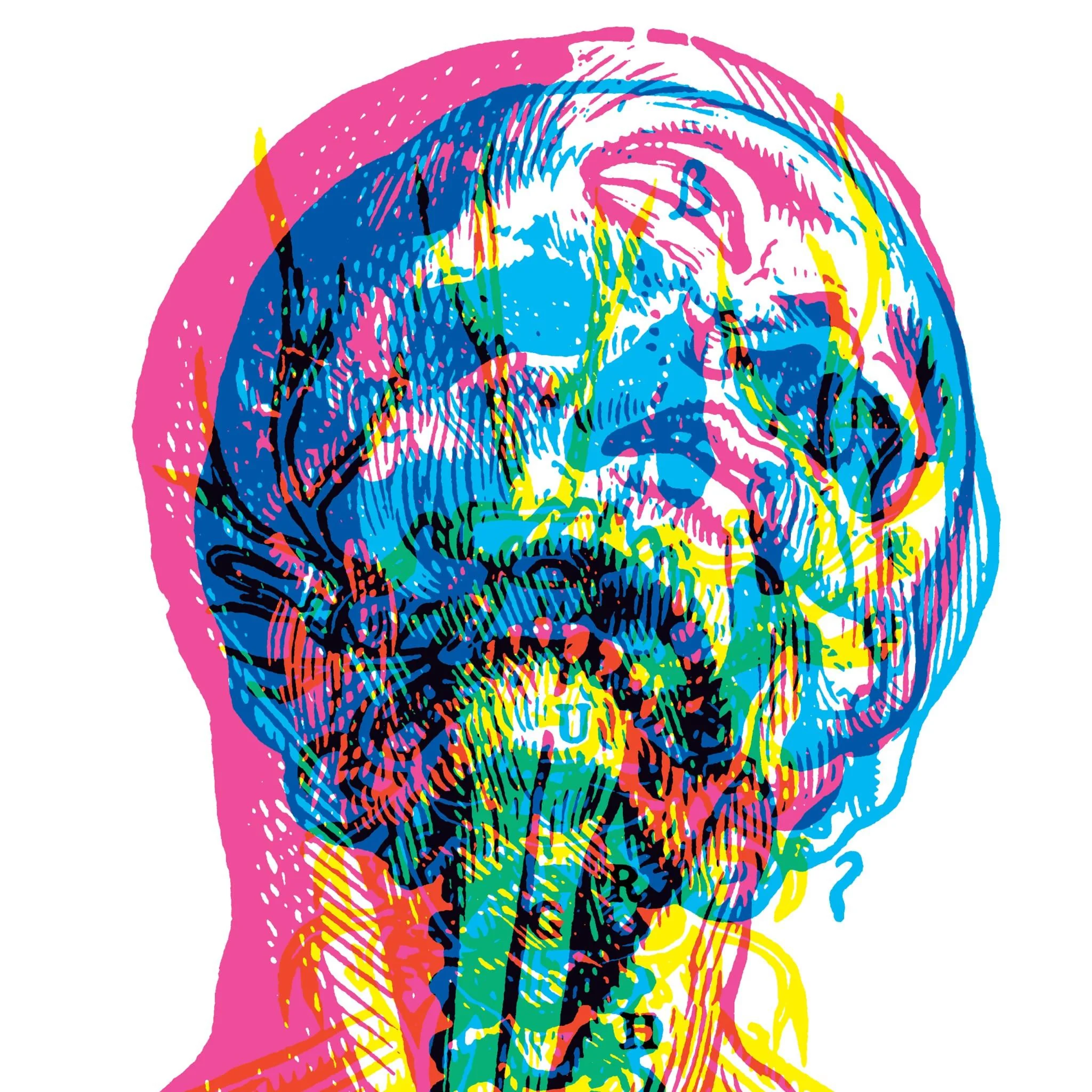
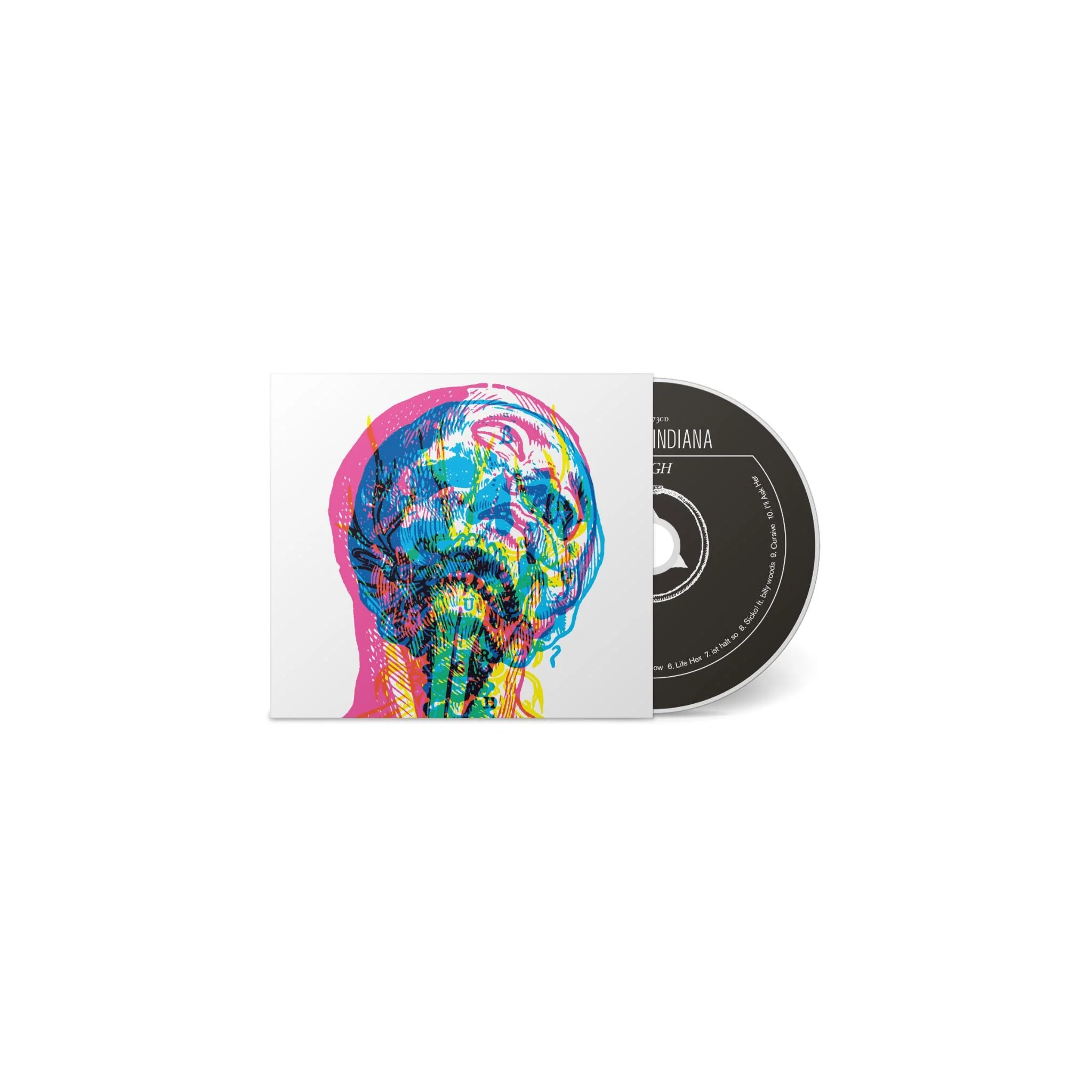
Though deeply personal, URGH reflects the violent, fractured state of the wider world. Caulfield’s lyrics grapple with assault, systemic indiJerence, and the omnipresence of pain, while also insisting on moments of beauty and solidarity. URGH belongs in the physical world, and the artwork by Carnovsky, featuring an anatomical illustration of Andreas Vesalius, underscores the record’s visceral confrontation with the body and its
limits.
URGH is both otherworldly, and physical and cathartic, both a first step toward healing and a refusal to let the conversation die.
into oblivion and transcendence. Across the ten tracks, the band interpolate their own unconventional language into a mantra for self-determination and resilience, forging a template for a brighter future before it fades to black.
Much of the album was written during a residency at an eerie studio house in the outskirts of Leeds, then recorded across Berlin and Greater Manchester. It was an intense environment partially due to the health issues faced by Caulfield and Macdougall during the writing and recording process.
Yet Mandy, Indiana remain uncompromising. Caulfield uses her voice as a distorted instrument and a weapon, oscillating between playful and eviscerating. The throbbing siren-sound of “Magazine” stands alongside the cut-up vocal fry of “try saying” and the shapeshi5ing ferocity of “ist halt so,” which channels the urgency of protest movements, referencing resistance to the genocide in Gaza while speaking to struggles more broadly, while final track “I’ll Ask Her” is a deliberate directness calling out toxic boy’s club culture and a tenacious reckoning that hangs over the album at large.
Although there are still undeniable “bangers” (like the frazzled rap of “Sicko!” featuring billy woods), URGH o5en feels hewn with precise cinema. From the bristling techno of “Cursive” to the deconstructed feedback loops of “Life Hex,” the album moves between industrial catharsis and cinematic unease, threading a tension that Fair describes as “a remix of itself.” This contrasting palette is both a necessary aspect of the record as well as
the underlying connective tissue.
Though deeply personal, URGH reflects the violent, fractured state of the wider world. Caulfield’s lyrics grapple with assault, systemic indiJerence, and the omnipresence of pain, while also insisting on moments of beauty and solidarity. URGH belongs in the physical world, and the artwork by Carnovsky, featuring an anatomical illustration of Andreas Vesalius, underscores the record’s visceral confrontation with the body and its
limits.
URGH is both otherworldly, and physical and cathartic, both a first step toward healing and a refusal to let the conversation die.
$6.43
Original: $21.42
-70%URGH—
$21.42
$6.43Product Information
Product Information
Shipping & Returns
Shipping & Returns
Description
For Mandy, Indiana, the truth is the only way through. On their Sacred Bones debut URGH, the four-piece — vocalist Valentine Caulfield, guitarist and producer Scott Fair, synth player Simon Catling, and drummer Alex Macdougall — are a force of uncanny nature, gra5ing together a record that is as much a call to action as a parlay
into oblivion and transcendence. Across the ten tracks, the band interpolate their own unconventional language into a mantra for self-determination and resilience, forging a template for a brighter future before it fades to black.
Much of the album was written during a residency at an eerie studio house in the outskirts of Leeds, then recorded across Berlin and Greater Manchester. It was an intense environment partially due to the health issues faced by Caulfield and Macdougall during the writing and recording process.
Yet Mandy, Indiana remain uncompromising. Caulfield uses her voice as a distorted instrument and a weapon, oscillating between playful and eviscerating. The throbbing siren-sound of “Magazine” stands alongside the cut-up vocal fry of “try saying” and the shapeshi5ing ferocity of “ist halt so,” which channels the urgency of protest movements, referencing resistance to the genocide in Gaza while speaking to struggles more broadly, while final track “I’ll Ask Her” is a deliberate directness calling out toxic boy’s club culture and a tenacious reckoning that hangs over the album at large.
Although there are still undeniable “bangers” (like the frazzled rap of “Sicko!” featuring billy woods), URGH o5en feels hewn with precise cinema. From the bristling techno of “Cursive” to the deconstructed feedback loops of “Life Hex,” the album moves between industrial catharsis and cinematic unease, threading a tension that Fair describes as “a remix of itself.” This contrasting palette is both a necessary aspect of the record as well as
the underlying connective tissue.
Though deeply personal, URGH reflects the violent, fractured state of the wider world. Caulfield’s lyrics grapple with assault, systemic indiJerence, and the omnipresence of pain, while also insisting on moments of beauty and solidarity. URGH belongs in the physical world, and the artwork by Carnovsky, featuring an anatomical illustration of Andreas Vesalius, underscores the record’s visceral confrontation with the body and its
limits.
URGH is both otherworldly, and physical and cathartic, both a first step toward healing and a refusal to let the conversation die.
into oblivion and transcendence. Across the ten tracks, the band interpolate their own unconventional language into a mantra for self-determination and resilience, forging a template for a brighter future before it fades to black.
Much of the album was written during a residency at an eerie studio house in the outskirts of Leeds, then recorded across Berlin and Greater Manchester. It was an intense environment partially due to the health issues faced by Caulfield and Macdougall during the writing and recording process.
Yet Mandy, Indiana remain uncompromising. Caulfield uses her voice as a distorted instrument and a weapon, oscillating between playful and eviscerating. The throbbing siren-sound of “Magazine” stands alongside the cut-up vocal fry of “try saying” and the shapeshi5ing ferocity of “ist halt so,” which channels the urgency of protest movements, referencing resistance to the genocide in Gaza while speaking to struggles more broadly, while final track “I’ll Ask Her” is a deliberate directness calling out toxic boy’s club culture and a tenacious reckoning that hangs over the album at large.
Although there are still undeniable “bangers” (like the frazzled rap of “Sicko!” featuring billy woods), URGH o5en feels hewn with precise cinema. From the bristling techno of “Cursive” to the deconstructed feedback loops of “Life Hex,” the album moves between industrial catharsis and cinematic unease, threading a tension that Fair describes as “a remix of itself.” This contrasting palette is both a necessary aspect of the record as well as
the underlying connective tissue.
Though deeply personal, URGH reflects the violent, fractured state of the wider world. Caulfield’s lyrics grapple with assault, systemic indiJerence, and the omnipresence of pain, while also insisting on moments of beauty and solidarity. URGH belongs in the physical world, and the artwork by Carnovsky, featuring an anatomical illustration of Andreas Vesalius, underscores the record’s visceral confrontation with the body and its
limits.
URGH is both otherworldly, and physical and cathartic, both a first step toward healing and a refusal to let the conversation die.