🎉 Up to 70% Off Selected ItemsShop Sale
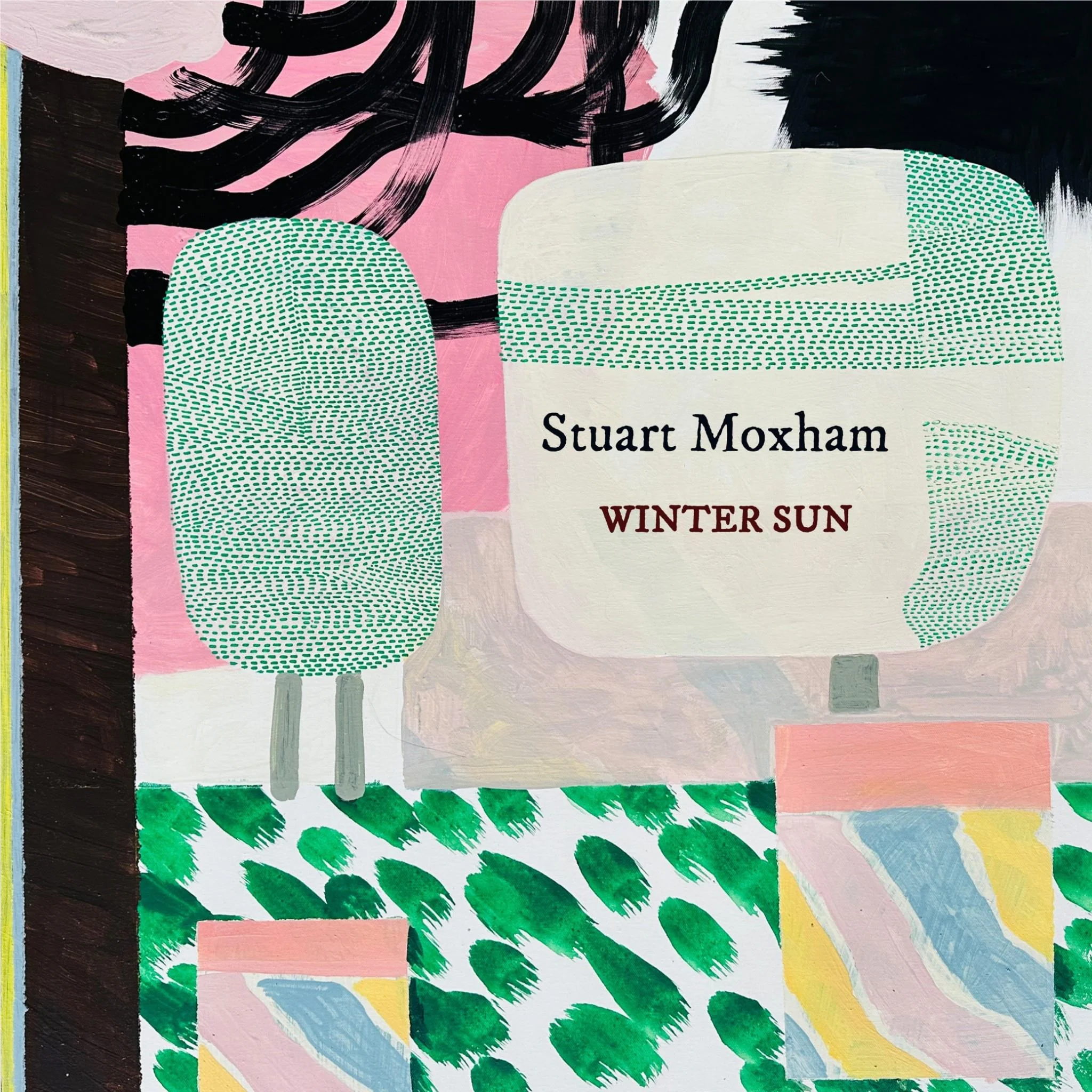
Winter Sun
Few artists arrive as compellingly yet elusively as did Stuart Moxham upon the startling debut of Young Marble Giant’s sole studio album, Colossal Youth.
Initial excitement was thrust upon the young Alison Statton, who sang songs written by Stuart with a couple of exceptions. The unaffected tone of her voice was in steep contrast to the typical goings-on in that still quite punky time, but it was what she sang that fully sold it. Moxham’s lyrics were both intensely personal and woefully oblique. There seemed to be a sort of story in there. Confusingly, that story often felt like it was Alison’s rather than the fellow who’d penned it. The unexpected miracle a deal with Rough Trade and the album’s subsequent success had the band stymied for a second act and it wasn’t long before the group disintegrated, although circumstances often brought members and a few of their peers - among them Debbie Pritchard, Spike Williams, and
a third Moxham brother, Drew. - Phil Moxham was the band’s bassist - together in odd combinations and pairings.
None of the three YMG members have been especially prolific, but it’s Stuart’s career that has seemed the least straightforward, as if he’d wondered, “What to do when your debut is a nearly perfect artefact?” In the case of his first “solo” full-length in thirty years, Stuart took the unusual step of entering an alien studio with American producer Dave Trumfio (who’s also the leader of Pulsars and bassist for Mekons) and allowing him to decide what tracks (of a large number submitted by Stuart) to record, and how they’d be orchestrated.
Or not. In this case - save for the writing and composing - it’s really Dave’s album as much as Stuart’s. The tracks went with Dave back to LA, where they were mixed, a few parts added (including subtle backing vocals from the incredible Linda Smith) . . . then later unmixed and reworked by John Henderson and Roni Ayala back in Valencia. Both versions will be made available, and both have a compelling cohesion missing from some of Stuart’s work since YMG. Stuart’s minimalism is quite intact, the range of emotions quite wide. There are few artists operating today like Stuart Moxham, a composer of the upper echelon of innate talent who combines avant-garde ideas with deceptively forthright personal lyrics, solid hooks, ambience and vaguely off-centre instrumentation
which defies the casual marketplace as confoundingly as it ever did to the underground, whatever that is these days. His songs have been admired and / covered by everyone from Lush to Kurt Cobain, adaptations in Japanese and even a French-language hit by Etienne Daho, adaptations by Hole, Galaxie 500, Magnetic Fields, Belle And Sebastian and many others - but a new Stuart Moxham album is a special kind of joy.
Initial excitement was thrust upon the young Alison Statton, who sang songs written by Stuart with a couple of exceptions. The unaffected tone of her voice was in steep contrast to the typical goings-on in that still quite punky time, but it was what she sang that fully sold it. Moxham’s lyrics were both intensely personal and woefully oblique. There seemed to be a sort of story in there. Confusingly, that story often felt like it was Alison’s rather than the fellow who’d penned it. The unexpected miracle a deal with Rough Trade and the album’s subsequent success had the band stymied for a second act and it wasn’t long before the group disintegrated, although circumstances often brought members and a few of their peers - among them Debbie Pritchard, Spike Williams, and
a third Moxham brother, Drew. - Phil Moxham was the band’s bassist - together in odd combinations and pairings.
None of the three YMG members have been especially prolific, but it’s Stuart’s career that has seemed the least straightforward, as if he’d wondered, “What to do when your debut is a nearly perfect artefact?” In the case of his first “solo” full-length in thirty years, Stuart took the unusual step of entering an alien studio with American producer Dave Trumfio (who’s also the leader of Pulsars and bassist for Mekons) and allowing him to decide what tracks (of a large number submitted by Stuart) to record, and how they’d be orchestrated.
Or not. In this case - save for the writing and composing - it’s really Dave’s album as much as Stuart’s. The tracks went with Dave back to LA, where they were mixed, a few parts added (including subtle backing vocals from the incredible Linda Smith) . . . then later unmixed and reworked by John Henderson and Roni Ayala back in Valencia. Both versions will be made available, and both have a compelling cohesion missing from some of Stuart’s work since YMG. Stuart’s minimalism is quite intact, the range of emotions quite wide. There are few artists operating today like Stuart Moxham, a composer of the upper echelon of innate talent who combines avant-garde ideas with deceptively forthright personal lyrics, solid hooks, ambience and vaguely off-centre instrumentation
which defies the casual marketplace as confoundingly as it ever did to the underground, whatever that is these days. His songs have been admired and / covered by everyone from Lush to Kurt Cobain, adaptations in Japanese and even a French-language hit by Etienne Daho, adaptations by Hole, Galaxie 500, Magnetic Fields, Belle And Sebastian and many others - but a new Stuart Moxham album is a special kind of joy.
$5.53
Original: $18.45
-70%Winter Sun—
$18.45
$5.53Product Information
Product Information
Shipping & Returns
Shipping & Returns
Description
Few artists arrive as compellingly yet elusively as did Stuart Moxham upon the startling debut of Young Marble Giant’s sole studio album, Colossal Youth.
Initial excitement was thrust upon the young Alison Statton, who sang songs written by Stuart with a couple of exceptions. The unaffected tone of her voice was in steep contrast to the typical goings-on in that still quite punky time, but it was what she sang that fully sold it. Moxham’s lyrics were both intensely personal and woefully oblique. There seemed to be a sort of story in there. Confusingly, that story often felt like it was Alison’s rather than the fellow who’d penned it. The unexpected miracle a deal with Rough Trade and the album’s subsequent success had the band stymied for a second act and it wasn’t long before the group disintegrated, although circumstances often brought members and a few of their peers - among them Debbie Pritchard, Spike Williams, and
a third Moxham brother, Drew. - Phil Moxham was the band’s bassist - together in odd combinations and pairings.
None of the three YMG members have been especially prolific, but it’s Stuart’s career that has seemed the least straightforward, as if he’d wondered, “What to do when your debut is a nearly perfect artefact?” In the case of his first “solo” full-length in thirty years, Stuart took the unusual step of entering an alien studio with American producer Dave Trumfio (who’s also the leader of Pulsars and bassist for Mekons) and allowing him to decide what tracks (of a large number submitted by Stuart) to record, and how they’d be orchestrated.
Or not. In this case - save for the writing and composing - it’s really Dave’s album as much as Stuart’s. The tracks went with Dave back to LA, where they were mixed, a few parts added (including subtle backing vocals from the incredible Linda Smith) . . . then later unmixed and reworked by John Henderson and Roni Ayala back in Valencia. Both versions will be made available, and both have a compelling cohesion missing from some of Stuart’s work since YMG. Stuart’s minimalism is quite intact, the range of emotions quite wide. There are few artists operating today like Stuart Moxham, a composer of the upper echelon of innate talent who combines avant-garde ideas with deceptively forthright personal lyrics, solid hooks, ambience and vaguely off-centre instrumentation
which defies the casual marketplace as confoundingly as it ever did to the underground, whatever that is these days. His songs have been admired and / covered by everyone from Lush to Kurt Cobain, adaptations in Japanese and even a French-language hit by Etienne Daho, adaptations by Hole, Galaxie 500, Magnetic Fields, Belle And Sebastian and many others - but a new Stuart Moxham album is a special kind of joy.
Initial excitement was thrust upon the young Alison Statton, who sang songs written by Stuart with a couple of exceptions. The unaffected tone of her voice was in steep contrast to the typical goings-on in that still quite punky time, but it was what she sang that fully sold it. Moxham’s lyrics were both intensely personal and woefully oblique. There seemed to be a sort of story in there. Confusingly, that story often felt like it was Alison’s rather than the fellow who’d penned it. The unexpected miracle a deal with Rough Trade and the album’s subsequent success had the band stymied for a second act and it wasn’t long before the group disintegrated, although circumstances often brought members and a few of their peers - among them Debbie Pritchard, Spike Williams, and
a third Moxham brother, Drew. - Phil Moxham was the band’s bassist - together in odd combinations and pairings.
None of the three YMG members have been especially prolific, but it’s Stuart’s career that has seemed the least straightforward, as if he’d wondered, “What to do when your debut is a nearly perfect artefact?” In the case of his first “solo” full-length in thirty years, Stuart took the unusual step of entering an alien studio with American producer Dave Trumfio (who’s also the leader of Pulsars and bassist for Mekons) and allowing him to decide what tracks (of a large number submitted by Stuart) to record, and how they’d be orchestrated.
Or not. In this case - save for the writing and composing - it’s really Dave’s album as much as Stuart’s. The tracks went with Dave back to LA, where they were mixed, a few parts added (including subtle backing vocals from the incredible Linda Smith) . . . then later unmixed and reworked by John Henderson and Roni Ayala back in Valencia. Both versions will be made available, and both have a compelling cohesion missing from some of Stuart’s work since YMG. Stuart’s minimalism is quite intact, the range of emotions quite wide. There are few artists operating today like Stuart Moxham, a composer of the upper echelon of innate talent who combines avant-garde ideas with deceptively forthright personal lyrics, solid hooks, ambience and vaguely off-centre instrumentation
which defies the casual marketplace as confoundingly as it ever did to the underground, whatever that is these days. His songs have been admired and / covered by everyone from Lush to Kurt Cobain, adaptations in Japanese and even a French-language hit by Etienne Daho, adaptations by Hole, Galaxie 500, Magnetic Fields, Belle And Sebastian and many others - but a new Stuart Moxham album is a special kind of joy.